Reviewed · FULL-DAY
Istanbul Full-Day Private Christian (Byzantium) Tour
A full-day private tour like this is interesting because it lets you read Istanbul through the Byzantine Christian lens, not just as a stack of famous landmarks. You move site to site with a live guide on an air-conditioned coach, and the day is built around how art, power, and faith shaped Constantinople.
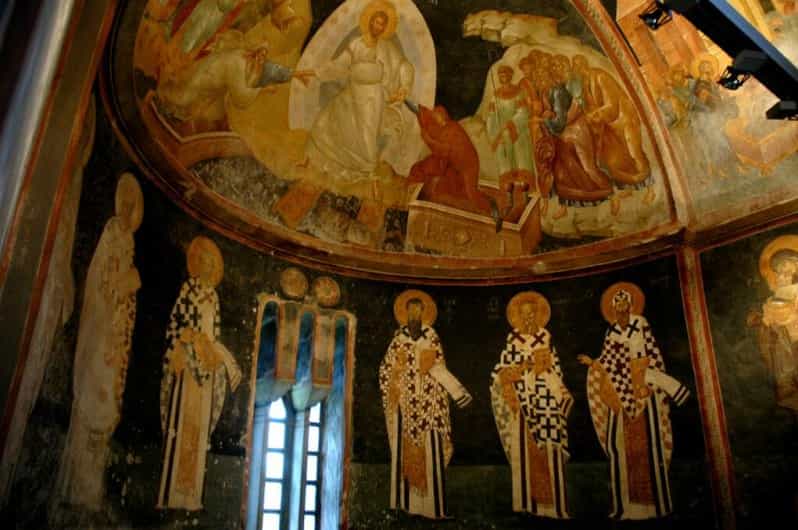
I especially like the focus on Byzantine visual culture, with the standout being the Church of St. Saviour in Chora and its famous mosaics and frescoes. I also really value that you get time at the Fener Orthodox Patriarchate and Hagia Sophia, so the story feels connected, not like separate photo stops. One drawback to consider is timing and access: the Chora Church is listed as closed for renovation until 31 December 2024, and you will see a different alternative instead.
Key Things I’d Pay Attention To
- Chora is the star, but it may be swapped if it is closed during renovation.
- Hagia Sophia museum entry is not included, so you should plan for that ticket cost.
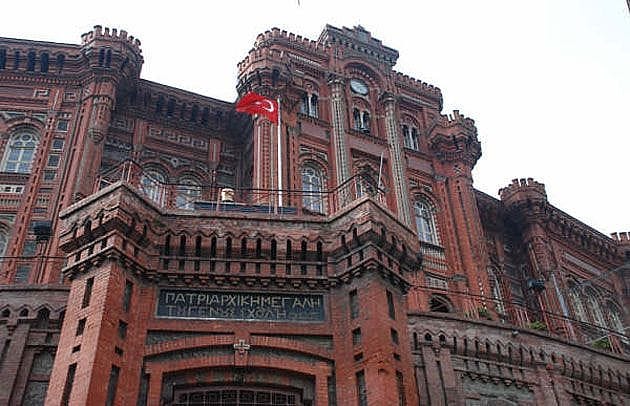
- Fener Patriarchate adds context, since it is tied to Orthodox Christianity in Constantinople.
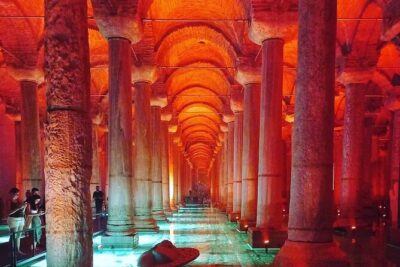
- Basilica Cistern closes the day with a very different, underground feel.
- Pickup is limited to specific areas on the European side, which affects convenience.
- Guide quality matters a lot on private tours, because the day depends on interpretation, not just architecture.
A Byzantine Christian Route That Actually Makes Sense
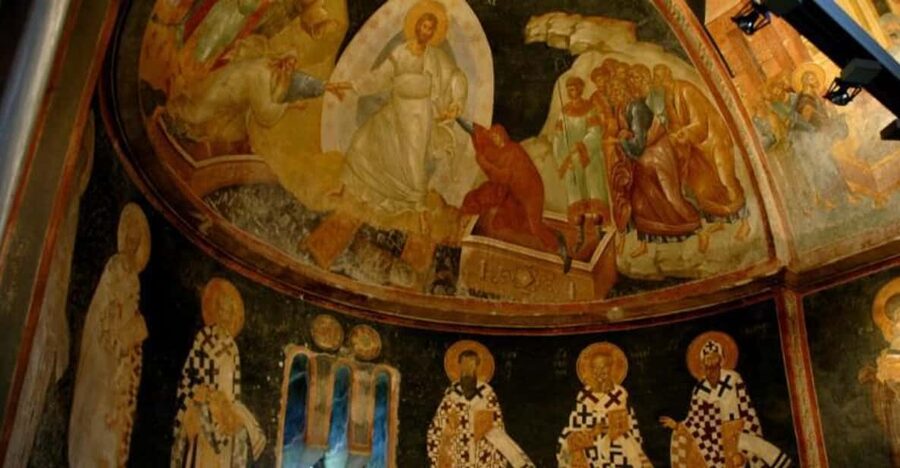
This tour is designed to feel like one continuous argument. In Istanbul, Christianity, Islam, and empire rule all overlap in the same neighborhoods. The route leans into that overlap, starting with Byzantine-era church art, then moving toward the Orthodox institutional heart in Fener, and finally into the huge-scale drama of Hagia Sophia and the quiet cool of Basilica Cistern.
The time structure works for a day trip: you start with the Chora area, build toward Hagia Sophia, and end underground. That last stop is not random. By the time you descend into Basilica Cistern, you already understand the theme, so the cistern feels like part of the Byzantine “how the city worked” story, not just a pretty lighting trick.
You will also be using a private vehicle for most of the day. That matters because distances on the historic peninsula can be longer than they look on a map, and you want your energy for walking and photos where it counts.
A few more Istanbul tours worth comparing
- Istanbul: Full-Day Highlights Tour with Guide and Lunch
★ 4.6 · 1,662 reviews - From Istanbul: Full-Day Princes Island Tour with Lunch
★ 4.0 · 1,550 reviews - ISTANBUL BEST: Iconic Landmarks Full Day PRIVATE Guided City Tour
★ 5.0 · 1,032 reviews
Church of St. Saviour in Chora (Kariye): Mosaics, Frescoes, and the Meaning of Chora
If you care about Byzantine art, the Chora Church is the main event. The name even helps you understand the site. Kariye comes from the ancient Greek word Chora, meaning outside of the city. That wording is a clue: before the city walls were erected, there was known to be a chapel outside of the city as early as the 5th century era.
This church has a layered rebuilding story too. It was rebuilt by Justinianus, and later, in the era of the Komnenoi, it served as a court chapel for important religious ceremonies. In other words, you are not just seeing a decorated building. You are seeing a place that shifted roles as political power and religious ceremony evolved.
The reason people love it comes down to what you see inside, the mosaics and frescoes. That is the heart of Byzantine visual storytelling: images that guide prayer, teach theology, and communicate status. When a guide explains how the artwork fits the building’s history, the paintings stop looking like decoration and start looking like evidence.
Practical catch: the Chora Church or mosque is listed as closed until 31 December 2024 for renovation. In that case, the guide will inform you when you are picked up from outside, and the tour will offer another place instead of Chora. If this is the one stop you booked for, you should treat it as a “check first” item before you go.
Zeyrek Mosque and the Byzantine City Texture
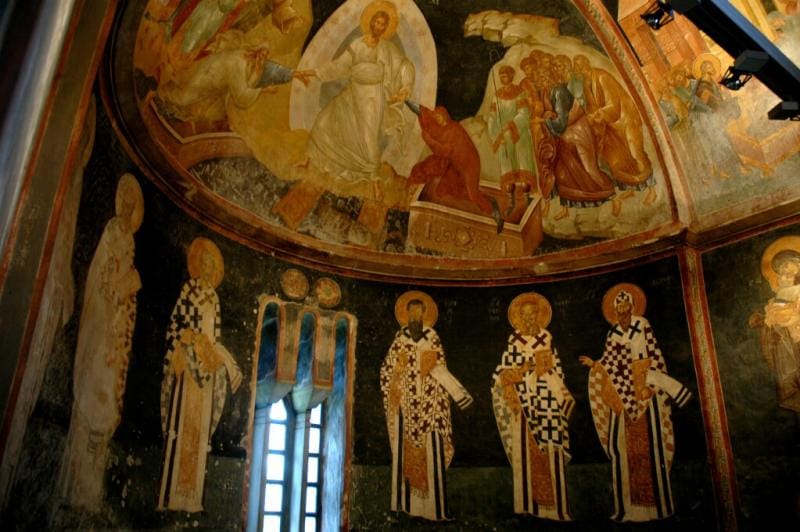
The itinerary also includes Zeyrek Mosque. Even without getting lost in technical details, it helps you widen the lens from one masterpiece to the broader city pattern. This is Istanbul’s superpower: you can go from major church art to a different religious setting and still feel the Byzantine infrastructure under it.
I like that the tour does not pretend the Byzantine story is only one building. You will also encounter more of the city texture along the way, with time that points to Byzantine ruins of churches and Byzantine stone houses. That kind of context is useful because it teaches you how Constantinople was structured, not just how it looked at its best.
What to watch for: if you are the type who wants the “why” behind each stop, choose questions. Ask your guide what changed, what stayed, and how Istanbul reused existing spaces. On a good day, you will feel the city tightening into a single timeline.
Fener Orthodox Patriarchate: Where Orthodox Christianity Centers in Istanbul
Fener is where the tour becomes more than visual art. You move to the Fener Orthodox Patriarchate, described as the Ecumenical Patriarchate of Constantinople and the seat of Orthodox Christianity since Constantine the Great’s declaration of Christianity as the religion of the Roman Empire.
Even if you already know the big names, I find it helps to stand in the place where the religious institution has carried on. The message your guide can give you here is practical, not just ceremonial: how religious leadership and symbolism helped shape identity across centuries of change.
This is also a good stop for people who want to understand what “Christian relics” means in Istanbul. Sometimes that phrase makes you think only of objects. Here, it is also about continuity, governance, and the living tradition behind the art.
Tip for enjoying it: give yourself time to look slowly at details, not only to capture photos. The guide’s interpretation can change how you read the space, especially if your guide has strong historical and archeological experience.
Same city, a different way to spend a day:
- Istanbul: Bosphorus Dinner Cruise & Show with Private Table
★ 4.8 · 44,561 reviews - Istanbul: Daytime or Sunset Sightseeing Cruise & Audio Guide
★ 4.8 · 14,430 reviews - Istanbul: Bosphorus Dinner Cruise with Turkish Night Show
★ 4.8 · 10,127 reviews - Best of Istanbul 1, 2 or 3-Day Private Guided Istanbul Tour
★ 5.0 · 8,922 reviews
Hagia Sophia Museum: The Scale, the Dome Math, and the Ticket Reality
Hagia Sophia is the heavy hitter, and it is heavy in more than one way. It was for centuries the largest church in the world. It still stands as a giant of Byzantine architecture, and the dome ranking is part of why it is so mind-blowing today. It is listed as having the 4th largest dome after St. Pauls in London, St. Peters in Rome, and the Duomo in Florence.
It also has a meaning-based nickname. It is described as dedicated to Hagia Sophia, or Divine Wisdom. That matters because Byzantine buildings often signal theology through design. The size is not just engineering bragging rights. It supports a spiritual idea: awe as a form of devotion.
Here is the key practical note: the Hagia Sophia stop is with the museum, and the ticket is not included. Entrance fees are included for the fees mentioned in the itinerary, but you should plan your day budget with the Hagia Sophia ticket in mind. If you show up without that, you might lose time while figuring out entry.
How to pace it so you do not feel rushed: pick one or two elements you want to understand deeply. For many people, it is the dome, and for others, it is how the space changes as you move around inside. A private guide is useful here because you can choose your focus instead of being dragged along a fixed script.
Basilica Cistern, Yerebatan Sarayı: Justinian’s Sunken Palace
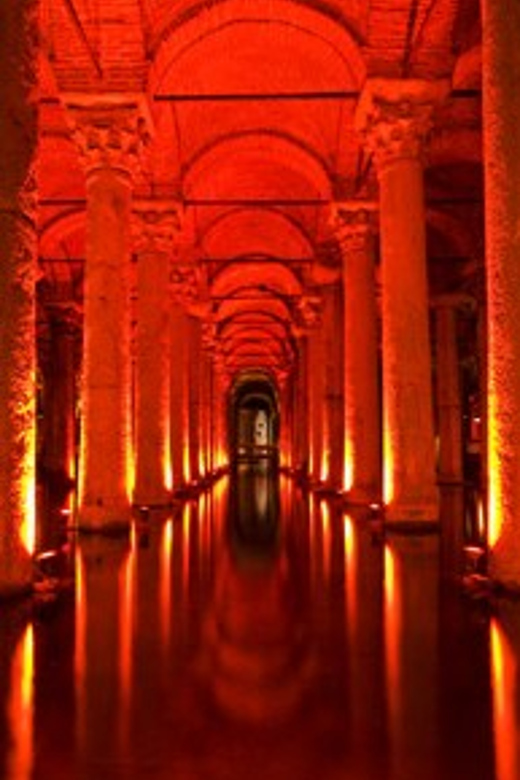
Ending in the Basilica Cistern is smart. The lighting and sound change everything, and it feels like you stepped into a different chapter of the Byzantine city.
The stop is described as the largest of several hundred ancient cisterns under Istanbul. It is located about 500 feet (150 meters) southwest of Hagia Sophia on the historical peninsula of Sarayburnu. The atmosphere is said to date back to the 6th century reign of Emperor Justinian I.
To me, this is one of those places where your guide can make you notice the unseen. You are surrounded by water storage engineering, but it also became a space of myth, mood, and photography. If your guide explains how cisterns fit the city’s life, you will leave feeling like you understand Istanbul infrastructure, not just Istanbul aesthetics.
Also, it is a great contrast after the busy, above-ground monumental sites. If you have been walking and absorbing for hours, you will appreciate the slower pace underground.
Private Coach, Pickup Zones, and How to Protect Your Time
You will travel by air-conditioned coach for the drive between stops. That helps on a full day because Istanbul traffic and walking add up fast, especially around the historic areas.
The pickup and drop-off are included from European city center hotels, but there is a defined zone. Hotel location must be in the Sultanahmet-Laleli-Topkapı-Aksaray-Taksim-Sirkeci area or the Şişli area. If you are staying outside those zones, you should expect you may need to arrange alternative transfer, since pickup is tied to those areas.
This matters because an 8-hour tour sounds long, but when pickup runs long or your location is far from the route, the day starts to feel shorter.
What I suggest you do: plan for comfortable shoes, since you will be doing real walking. Bring sunglasses too, and consider a camera with enough storage, because Hagia Sophia and the cistern are photo-friendly.
What You Pay For: Value and the One Ticket You Should Budget
The price is listed as $413 per person for an 8-hour full-day private experience. Whether that feels like a deal depends on two things: how much you value expert interpretation, and how smoothly your day runs with fewer logistical hassles.
On the value side, hotel pick-up and drop-off from the European city center areas are included. Entrance fees mentioned in the itinerary are also included. In a city like Istanbul, that kind of bundling can matter because you do not want to spend your prime sightseeing hours figuring out which ticket line is correct.
The one big cost you should not forget is Hagia Sophia museum ticketing, which is not included. Lunch is also not included. If you normally eat light, pack snacks or plan a nearby meal timing that works with your schedule.
Also keep in mind language options. The guide can work in Spanish, English, French, German, Italian, or Russian. If you prefer a specific language, confirm it with your booking so you get the explanation depth that makes this tour worth the money.
Guide Quality: The Difference Between a Tour and a Real Story
On private tours, the guide is the product. You can’t separate “what you see” from “how someone helps you see it.”
The most praised aspect from real experiences is that the guide can bring serious historical and archeological depth and still adapt to your interests. One standout example is a francophone guide with about 30 years of experience in historical and archeological guiding, who was able to adjust the pacing to the group and keep the conversation meaningful. Another positive comment simply pointed to getting a very good guide.
That is exactly what you want when the day includes complex sites. Chora is not just pretty artwork, and Fener is not just a building. Hagia Sophia is a museum experience where interpretation helps you move your eyes the right way. Without that, the day can still be beautiful, but it might feel like you are collecting monuments instead of understanding them.
A realistic consideration: this tour’s main Christian focus depends on consistent site access and a guide who knows the themes. If Chora is closed and your day shifts to an alternative, you will need the guide to still tie the day together. That is why it is worth going in expecting a little flexibility.
Who This Tour Suits Best
I think this tour is a good match if you:
- Want Byzantine Christian art and religious context, not just sightseeing.
- Like guided explanation, especially around mosaics, frescoes, and institutional history.
- Prefer a private setup with a live guide and fewer planning hassles.
- Are comfortable with a full 8 hours and walking at multiple major sites.
It may be less ideal if:
- Hagia Sophia museum tickets and lunch annoy you, because those are not included.
- You are very sensitive to schedule changes due to closures, since Chora is listed as closed until 31 December 2024 with an alternative planned.
- You use mobility equipment. The information says the tour is wheelchair accessible, but it also includes a note that it is not suitable for wheelchair users. Because the tour also lists restrictions like non-folding wheelchairs not being allowed, you should verify what will work before you commit.
Should You Book This Byzantine Christian Full-Day Tour?
Book it if you want a single day to connect the dots between Byzantine church art, Orthodox Christianity in Istanbul, the grand scale of Hagia Sophia, and the underground mood of Basilica Cistern. It is the kind of tour where a strong guide can turn famous buildings into a clear story.
Skip or at least double-check if your travel dates fall before 31 December 2024 and Chora is the one stop you cannot miss. Also budget for the Hagia Sophia museum ticket since it is not included, and plan for lunch on your own.
If you match those conditions, this is a practical, high-impact way to understand Istanbul from the Byzantine Christian viewpoint, with a pace that keeps you moving but not sprinting.
FAQ
What is the duration of the Istanbul Full-Day Private Christian (Byzantium) Tour?
The tour runs for 8 hours.
Where does hotel pick-up and drop-off happen?
Pick-up and drop-off are included for European city center hotels, but only within specific areas on the European side, including the Sultanahmet-Laleli-Topkapı-Aksaray-Taksim-Sirkeci zone and the Şişli area.
Is the Hagia Sophia museum ticket included?
No. The Hagia Sophia museum ticket is not included.
Is lunch included in the price?
No. Lunch is not included.
Is the Church of St. Saviour in Chora available during renovation?
The Chora Church or mosque is listed as closed until 31 December 2024 for renovation, and the guide will offer another place instead.
What should I bring for the tour?
Bring a passport or ID card, comfortable shoes, sunglasses, and a camera.
Recently reviewed around Istanbul
- 2 Days Cappadocia Tours from Istanbul★ 5.0 · 3 reviews
- Cappadocia Tour from Istanbul 2 Days 1 Night by Plane included Balloon Ride★ 5.0 · 43 reviews
- Cappadocia Tour Package from Istanbul by flight★ 5.0 · 9 reviews
- From Istanbul: 2-Day Cappadocia Highlights Tour by Plane★ 5.0 · 8 reviews
- 2-Day Gallipoli Tour from Istanbul – Small Group★ 4.0 · 67 reviews
- 2-Day Troy and Gallipoli Tour from Istanbul★ 4.5 · 32 reviews
- 2-Day Gallipoli and Troy Tour from Istanbul and return★ 5.0 · 17 reviews
- 2 Day Ephesus and Pamukkale Tour From Istanbul★ 4.5 · 28 reviews
Full-Day, compared.
Full-Day Highlights Tour with Guide and Lunch
Read our review →
ISTANBUL BEST: Iconic Landmarks Full Day PRIVATE Guided City Tour
Read our review →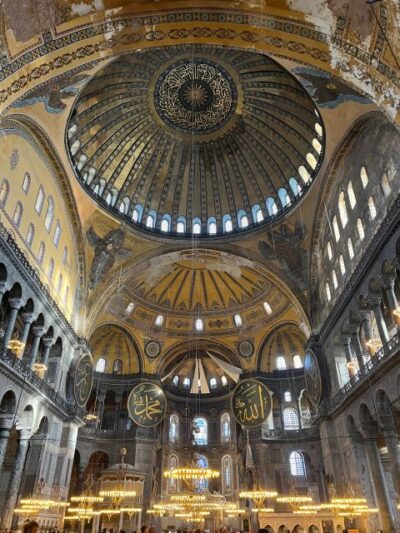
Istanbul to Gallipoli Full Day Tour with Lunch and Transfers
Read our review →
Full Day Istanbul 1, 2 or 3-Day Private City Guided Tour
Read our review →