Reviewed · TOURS
Tour to Byzantium
Istanbul during the Byzantine era feels real on this tour because you move through the same stretch of power where emperors, churches, and fortifications all lived side by side. I especially like how the route links Byzantine city defenses with major religious sites, and how you get clear context for 1,000 years of rule in one organized walk.
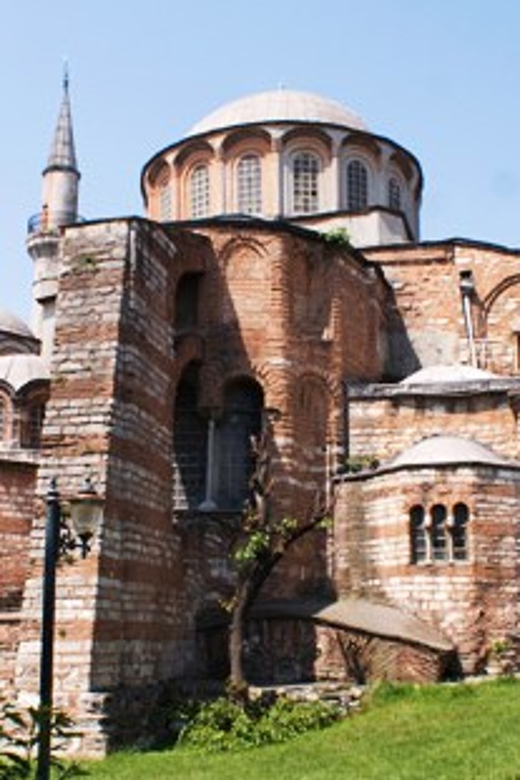
One key consideration: the stop at St. Savior in Chora (now the Kariye Museum) is outside only, so you will enjoy the setting and mosaics theme in the way your guide explains it, but you will not go in.
Key Highlights at a Glance
- Golden Horn start point: You begin at the Byzantine natural harbor and learn why it matters for Constantinople’s story.
- Patriarchate at Fener context: A quick orientation to Orthodox Christianity’s seat after Constantine made Christianity official.
- Panagia of Blachernae shrine story: You’ll hear how the Holy Virgin’s site became known for sacred water and sacred bath traditions.
- Chora (Kariye) viewed from outside: Great for understanding why the mosaics and frescoes made this place famous.
- Anemas Dungeons: Unique underground prison layout with multiple dungeon chambers, including levels below sea level.
- Tekfur Palace and the wall line: You end with the skyline feeling of Blachernae and the remains of the city walls.
Tracing Byzantine Istanbul From the Golden Horn
This is a focused, half-day way to understand Istanbul as Constantinople, without trying to read the entire city by yourself. The tour is scheduled for about 4 hours overall, with about 3 hours of guided touring time. You also get air-conditioned transportation plus pick-up from centrally located hotels, which matters in Istanbul when you want your feet on the ground, not stuck in slow logistics.
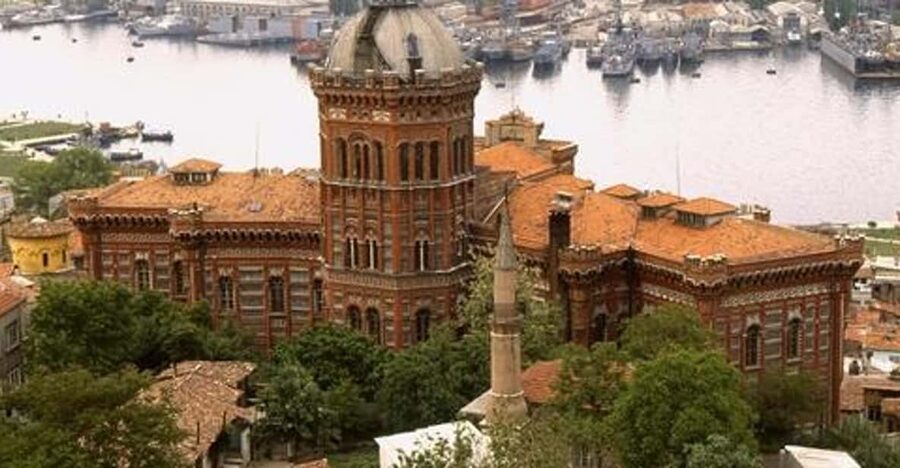
The journey begins near the Byzantine naval harbor known as the Golden Horn. Even if you have seen photos of it, it hits different once your guide connects the waterline to the way the city functioned. From higher viewpoints, the Golden Horn’s horn-like shape and light reflection are part of why it became such a natural geographic centerpiece. The tour then builds from there, walking through Byzantine street stories instead of treating the sites like isolated postcards.
I like this approach because it gives you mental landmarks. After the first stop, you start seeing Istanbul not as a random pile of monuments, but as a system: defense, faith, administration, and elite residence all pressed close to each other.
Other tours people book around Istanbul:
- Istanbul: Bosphorus Dinner Cruise & Show with Private Table
★ 4.8 · 44,561 reviews - Istanbul: Daytime or Sunset Sightseeing Cruise & Audio Guide
★ 4.8 · 14,430 reviews - Istanbul: Bosphorus Dinner Cruise with Turkish Night Show
★ 4.8 · 10,127 reviews
Patriarchate at Fener, Orthodox Roots in a Living City
One of the early stops is the Patriarchate at Fener. This is where the tour gives you a historical anchor point: after Constantine the Great declared Christianity the official religion of the Roman Empire, Orthodox Christianity found a powerful seat. You are not just hearing dates. You are getting the reason the city’s religious gravity mattered for centuries.
I find it helps to treat this part like orientation. When you know what Fener represents, the later church sites carry more weight. You understand that Byzantine Istanbul was not only an empire of walls and emperors, it was also a city where religion shaped daily life and political legitimacy.
For practical travelers: since pick-up is included only for centrally located hotels, you will want to confirm your exact meeting details when you book. The supplier will guide you on alternative meeting points if your hotel is not reachable.
Panagia of Blachernae and the Power of Sacred Water
Next you move to the Church of Panagia of Blachernae, one of the best known Byzantine shrines dedicated to the Holy Virgin. This stop is meaningful because it is not just about architecture, it is about a belief system that people acted on for generations.
Your guide focuses on the famous traditions tied to the site, specifically the idea of Hagiasma, holy water, and Hagion Lousma, the sacred bath. Those terms might sound unfamiliar at first, but the tour frames them so you can understand why pilgrims cared, why the shrine grew in reputation, and why emperors and elites took interest in the religious sites near their power base.
This is also a good spot to slow down. You will be standing in a place that the Byzantine world treated as more than a church. It was part of a larger routine of devotion and healing beliefs, and your guide’s explanations give you the why behind the reputation.
St. Savior in Chora (Kariye Museum) Without Going Inside
The stop at St. Savior in Chora is now the Kariye Museum, but on this tour you see it from the outside only. That sounds limiting on paper, but it can still be a smart choice if your goal is understanding the overall Byzantine layout.
The tour highlights what made this monastery famous in the first place: fantastic mosaics and frescoes that depict Bible scenes. Even without entering, you can grasp the significance. The guide’s job here is to connect the building’s story to what you would later recognize if you ever return on a separate ticketed visit.
If you strongly want to see mosaics and frescoes up close inside, plan a follow-up visit with an entry ticket. But if you want a guided “big picture” day that includes major sites in a manageable route, the outside-only approach keeps the tour moving and helps you see the broader defensive and palace connections later in the itinerary.
Same city, a different way to spend a day:
- Best of Istanbul 1, 2 or 3-Day Private Guided Istanbul Tour
★ 5.0 · 8,922 reviews - Istanbul: Basilica Cistern Fast-Track Entry and Audio Guide
★ 4.6 · 7,521 reviews - Istanbul: Hagia Sophia Skip-the-Line Ticket & Museum Option
★ 3.7 · 4,958 reviews - Istanbul: Hodjapasha Whirling Dervishes Show & Exhibition
★ 4.4 · 4,790 reviews
Anemas Dungeons: A Prison Built Like a Labyrinth
Then comes one of the most unusual stops on the route: Anemas Dungeons, part of the Blachernae Palace complex. This place stands out because it is described as unique in its architectural structure. Instead of a single prison block, it was organized as 14 separate dungeons, each with two basements below sea level.
That detail changes how you understand the site. It is not just a dungeon, it is a designed system that handled political imprisonment with a level of planning that tells you how serious the state was about controlling high-ranking figures. Your guide’s explanations connect that underground complexity to Blachernae as a power zone, not just a quiet neighborhood edge.
This is also where the value of a strong guide becomes obvious. When you understand the layout logic, the walls stop being abstract history and start feeling like real machinery of governance. If you get a guide who has a true storyteller mindset, you will likely find yourself asking follow-up questions.
Tekfur Palace, Then the Long Line of the Walls
Tekfur Palace is a major payoff stop. Built in the 12th century and adjacent to the city walls, it is presented as the only surviving pavilion of the Blachernae Palace. That makes it a rare visual link between palace life and fortification life.
Standing near Tekfur Palace helps you picture how elite spaces sat next to the defense system. It makes the city feel less like a museum and more like a set of working zones. You can connect it to the earlier shrine and prison stops, because everything in the route sits in the same big idea: Byzantine Istanbul ran on control, belief, and protection.
Finally, you see the remains of the 5th-century Byzantine city walls. These walls surrounded the acropolis of Byzantium and stretched about 13 miles (22 kilometers), with 96 towers and 9 main gates. Even though you are only seeing remnants, your guide’s explanation gives you scale. It is hard to appreciate scale from a quick street view, but a guided route helps you get that mental map fast.
Price and What You Really Get for $85
At $85 per person, this tour can be a good value if you want structure and interpretation, not just a photo stop. What you get is practical: air-conditioned transportation, pick-up from centrally located hotels, museum entrance fees, and a skip-the-ticket-line benefit.
That bundle matters in Istanbul. Once you start adding up transport time, individual tickets, and the cost of paying for guided context somewhere else, the price starts looking less like a splurge and more like time insurance. You are also not stuck figuring out which buildings matter most. The route focuses on Byzantine-era anchors that build on each other.
Duration is another part of the value equation. You are out for about 4 hours total, so it fits well between other Istanbul plans. It is not an all-day marathon where you lose energy and start rushing.
The main trade-off is scope. This is not a citywide deep survey. It is a targeted slice, and one key site is outside only. If you want to spend hours inside Kariye Museum, you will need a separate plan.
Guide Quality, Language Choice, and the Small Things That Matter
This tour runs with a live guide in English or Spanish. That helps a lot if your reading of the Byzantine story is still forming. Good guiding turns dates into meaning, and it is exactly the kind of transformation that shows up when the guide is a strong historian.
One name that comes up in the tour experience is Umut, described as an excellent guide and a true historian. I like that detail because it signals what you should hope for: a guide who can connect sites to the bigger empire story instead of reciting facts like a script. In at least some cases, the guide also adds an extra stop when possible, which is a nice bonus if the group timing allows it.
One more practical note: after booking, you need to call the local supplier to confirm the exact time and check free shuttle availability. Free shuttle pick-up is offered between 13:00 and 14:00 depending on your hotel, and it takes about 45 to 60 minutes. If your hotel is not centrally located or not accessible, you’ll get an alternate meeting point.
Also remember: hotel drop-off is not included. So plan your return time with that in mind.
Who Should Book This Byzantine Istanbul Tour
I think this tour fits best if you want a history-driven walk with clear stops and a guide who can connect them into one story. It is ideal for first-timers who feel overwhelmed by Istanbul’s layers, and it works well if you already know the names Constantinople and Hagia Sophia, but want a Byzantine-to-Bysantine bridge.
You will likely enjoy it if:
- You like churches, fortifications, and political history more than shopping stops
- You want a manageable route that still covers major sites
- You prefer guided context over self-guided wandering
It may not be the best match if:
- You want to go inside Kariye Museum specifically for the mosaics and frescoes
- You dislike walking and prefer a more indoor, museum-heavy day
Should You Book Tour to Byzantium?
If your goal is to understand Byzantine Istanbul in a single, well-paced tour, I would book it. The price includes transportation, entrance fees, and skip-the-ticket-line help, so you are paying for time and interpretation, not just access to buildings. The route also gives you a smart sequence: Golden Horn context, Orthodox roots, Blachernae devotion, Chora meaning, then the prison and palace, ending with the walls.
Book it with eyes open about the Chora visit being exterior only. If you treat that as a preview and plan an optional return for interior viewing later, you get the best of both worlds: big-picture guidance now, and deeper art access when you have time.
FAQ
How long is the Tour to Byzantium?
The tour duration is listed as 4 hours. It is described as a 3-hour tour, so plan for about 3 hours of guided site time with additional time for pickup and travel.
When does the tour run?
It says the tour has a guaranteed departure on Tuesday afternoons. Starting times can vary, so you should check availability for your specific date.
What languages is the live guide available in?
The live tour guide is available in English and Spanish.
Is hotel pick-up included?
Yes, pick-up is included from centrally located hotels in Istanbul. The supplier will advise on alternative meeting points if your hotel is not accessible.
Does the tour include transportation?
Yes. The tour includes air-conditioned transportation.
What does the price include?
Included items are air-conditioned transportation, museum entrance fees, and centrally located hotel pick-up. Skip-the-ticket-line is also included.
Do I need to bring any documents?
Bring a passport or ID card.
Is anything not allowed during the tour?
Pets and smoking are not allowed.
How many people are required for the tour to operate?
A minimum of 6 people are required to operate the tour.
Recently reviewed around Istanbul
- 2 Days Cappadocia Tours from Istanbul★ 5.0 · 3 reviews
- Cappadocia Tour from Istanbul 2 Days 1 Night by Plane included Balloon Ride★ 5.0 · 43 reviews
- Cappadocia Tour Package from Istanbul by flight★ 5.0 · 9 reviews
- From Istanbul: 2-Day Cappadocia Highlights Tour by Plane★ 5.0 · 8 reviews
- 2-Day Gallipoli Tour from Istanbul – Small Group★ 4.0 · 67 reviews
- 2-Day Troy and Gallipoli Tour from Istanbul★ 4.5 · 32 reviews
- 2-Day Gallipoli and Troy Tour from Istanbul and return★ 5.0 · 17 reviews
- 2 Day Ephesus and Pamukkale Tour From Istanbul★ 4.5 · 28 reviews
Tours, compared.
Best of Istanbul 1, 2 or 3-Day Private Guided Istanbul Tour
Read our review →
Blue Mosque & Hagia Sophia Guided Tour w/ Tickets
Read our review →
Bosphorus Sightseeing Cruise Tour with Audio Guide
Read our review →
Princes Islands Tour with Heybeliada and Buyukada
Read our review →
Bursa & Uludag Tour with Lunch & Cable Car Option
Read our review →
Blue Mosque, Hagia Sophia, & Basilica Cistern Tour
Read our review →