
Reviewed · ISTANBUL
Istanbul Unveiled: A Quest for the Unique and Unusual Jewels
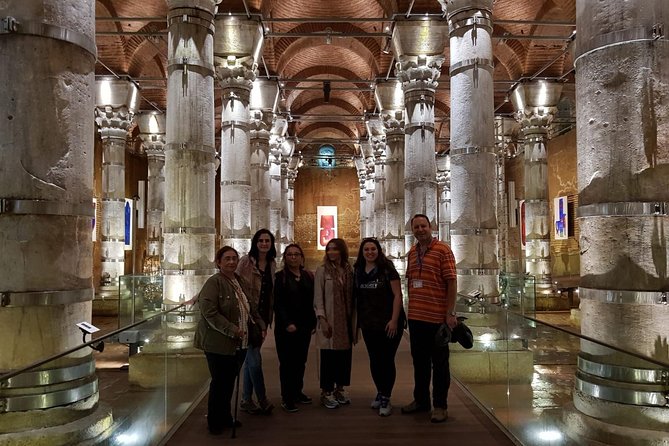
This tour is interesting because it mixes Istanbul’s famous layers with underground cisterns and sites that need special permission. I love the way the day connects Byzantine and Ottoman Istanbul with real explanations, and I love the rhythm of breaks built around Turkish tea, boza, and lunch. One thing to consider, though, is that you need a strong walking level since you’ll move between neighborhoods and descend into cisterns.
I booked my notes around the guide’s reputation for making the city feel linked, not like a list. In particular, people rave about Serif Yenen’s English, calm pace, and flexibility, including the ability to get into places other guides may not be able to access. You also get hotel drop-off at centrally located accommodations, which matters in a city where every mile of traffic can cost time.
Finally, the route is long enough to feel like a real day, about 6 to 7 hours, not a quick highlight loop. You’ll cover multiple landmarks, including Roman survivors and Ottoman masterpieces, and you’ll eat in ways that feel local, not staged for tourists.
Key things I’d circle on this tour
- Special-permission stops that many visitors never see, including private access to Byzantine ruins and cistern areas
- Cistern variety, not just one waterhole, with the underground descent experience spread across the day
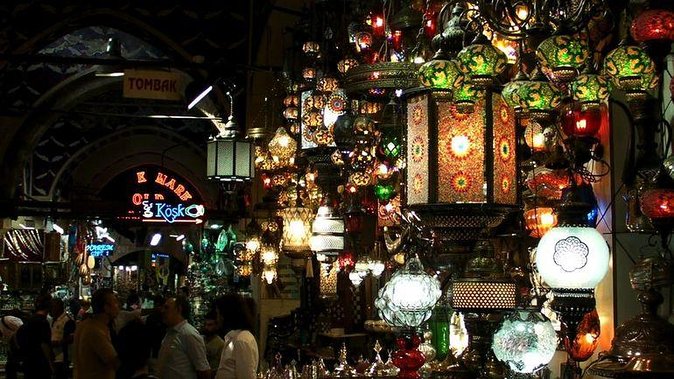
- Local food pacing, Turkish tea, boza tasting, and a Turkish-style lunch that moves fast
- A guide with strong connections, praised for finding access and keeping the story clear
- Great value focus for a guided day, since entrance fees, tea/coffee, lunch, and key tickets are included
Why this tour feels different from a standard Istanbul highlights walk
Most Istanbul tours do one of two things: they either race through the big names, or they slow down and get poetic. This one tries to do something more useful for your trip. It uses the big landmarks as anchors, then builds the rest of the route around the underground, the overlooked, and the “wait, how did we get here” moments.
That approach works because Istanbul rewards context. You start with a small mosque complex, where you can get your bearings fast with an easy tea moment. Then you move into Byzantine settings tied to emperors and public life. Later you descend into cisterns where the city’s water system becomes a story, not just an attraction. You get to connect architecture to power, religion, and daily survival.
Other tours people book around Istanbul:
- Istanbul: Bosphorus Dinner Cruise & Show with Private Table
★ 4.8 · 44,561 reviews - Istanbul: Daytime or Sunset Sightseeing Cruise & Audio Guide
★ 4.8 · 14,430 reviews - Istanbul: Bosphorus Dinner Cruise with Turkish Night Show
★ 4.8 · 10,127 reviews
Serif Yenen’s guide style, and why it shows up in the details
The main reason people rate this tour so highly is not the checklist. It’s the guide. Serif Yenen is repeatedly described as kind, funny, and very fluent in English, with an ability to explain eras without making them feel like a lecture. I like that kind of teaching style because it keeps you moving, but it also keeps your brain engaged.
You’ll also feel the organization. Reviews point out careful pacing, reliable restaurant choices, and a practical flow from stop to stop. Another theme is flexibility: when something interesting comes up, the guide adjusts without turning the day into chaos. If you have food needs, you’ll also like that the guide is attentive, including the ability to steer you toward a good option when a visitor is vegetarian.
One more practical advantage: people mention that Serif has strong access and connections. In Istanbul, that matters because some spaces are not normally open to random tour groups. Even if you are not chasing “exclusive” for its own sake, special access makes the story feel more real.
The overall pacing: 6-7 hours that moves, but does not feel rushed
Plan on a full, active afternoon. The duration is listed as about 6 to 7 hours, and the stops are spread out with short site visits plus a few breaks that still keep you on schedule. You’ll spend around an hour at the first mosque area, then smaller blocks at ruins, cistern sites, and landmarks. Lunch sits in the middle so you are not starving when you hit the next underground segment.
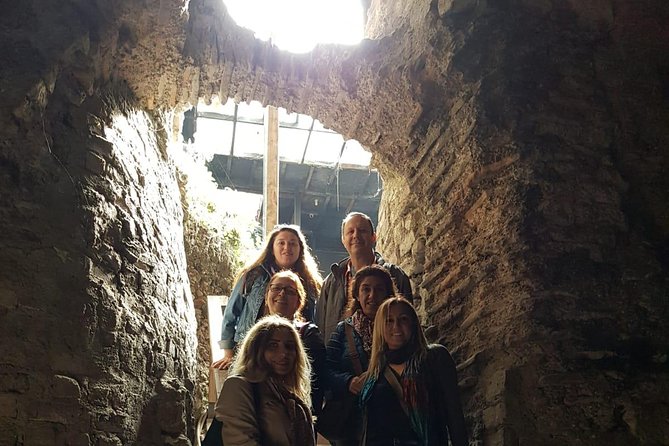
This is not a sit-and-listen tour where you barely move. It includes stair and descent time at multiple cisterns, and you’ll be walking between neighborhoods. If you are used to long sightseeing days, you’ll be fine. If you normally struggle with stairs, bring that caution into your planning.
Start at Küçük Ayasofya: tea first, then the layers of Byzantine Istanbul
Your day begins at the Küçük Ayasofya Mosque garden cafe at Küçük Ayasofya. This is a smart start because it gives you a calm moment before you start hunting for details. You sip Turkish tea while the guide helps you connect Istanbul’s geography and history. That tea break is not just a snack, it’s a warm-up for the rest of the day.
Küçük Ayasofya itself is a precursor to the more famous Hagia Sophia. It was built under Emperor Justinian, and it keeps Byzantine architectural features. The best part here is that it feels quieter than the headline sites. The tour keeps it focused: you’re not losing time, you’re getting an early sense of how Byzantine architecture evolved.
What to watch: wear shoes that work on uneven outdoor surfaces. Even in “garden cafe” territory, Istanbul can be a bit textured underfoot.
Same city, a different way to spend a day:
- Best of Istanbul 1, 2 or 3-Day Private Guided Istanbul Tour
★ 5.0 · 8,922 reviews - Istanbul: Basilica Cistern Fast-Track Entry and Audio Guide
★ 4.6 · 7,521 reviews - Istanbul: Hagia Sophia Skip-the-Line Ticket & Museum Option
★ 3.7 · 4,958 reviews - Istanbul: Hodjapasha Whirling Dervishes Show & Exhibition
★ 4.4 · 4,790 reviews
Stop 2 at a private Byzantine palace setting
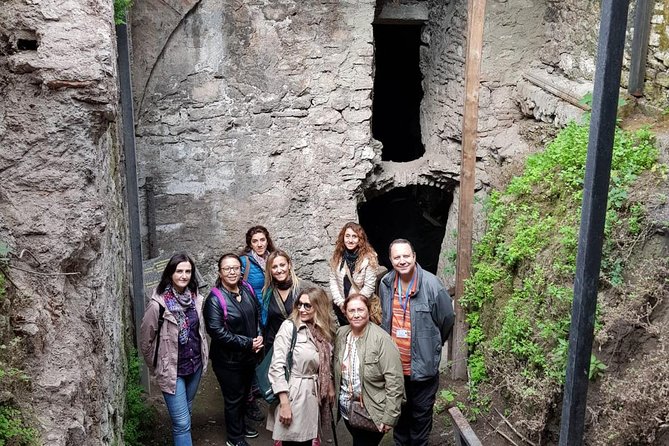
Next you head to a Byzantine Great Palace ruin visit tied to the Eresin Hotel Sultanahmet. This is one of the short stops, about 30 minutes, and it is described as a private location that requires special permission.
This matters because palace ruins in Istanbul can feel like a puzzle when you only see fragments from the outside. With guided access, you can see how the space functioned and why it fits into the empire story. In practical terms, it’s also a contrast point: after the more religious museum style atmosphere of the first stop, this one brings you back to governance and power.
What to watch: since the time block is short, you’ll want to stay mentally engaged. This is not the place to treat it like a casual stroll.
Oriental rugs stop, plus a cistern with special access
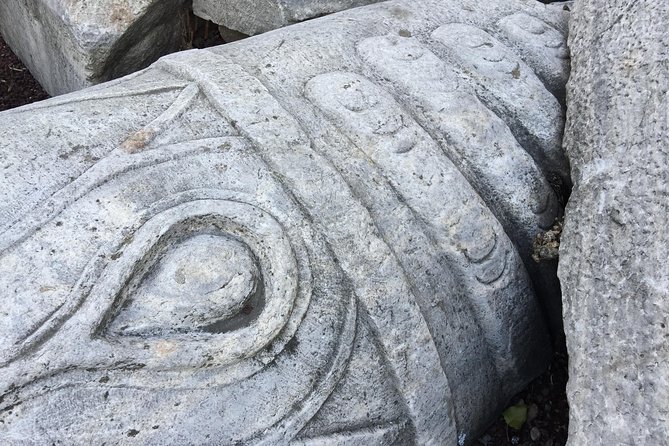
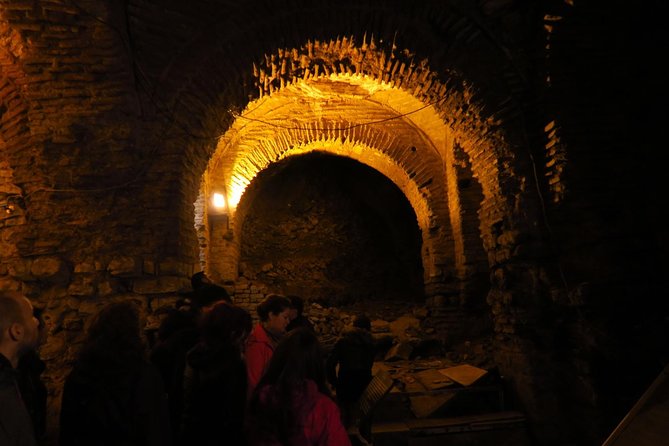
Then you move to Nakkas Oriental Rugs & Textiles, where you get an experience tied to underground Byzantine water systems. The tour includes an exclusive visit to a cistern accessible by special permission, with an exhibition connected to the ancient Hippodrome.
This combination is a big part of why the day feels different. You see textiles as a cultural product, but you also link them to place and time through the nearby underground structure. The cistern setting helps the water story feel physical. You are not just hearing “Constantinople needed water,” you’re standing in the kind of space that made the city function.
What to watch: keep expectations realistic for a cistern. You may be dealing with cooler air and damp surfaces. Bring a light layer if you get chilly easily.
Hippodrome: where public life, not just monuments, gets explained
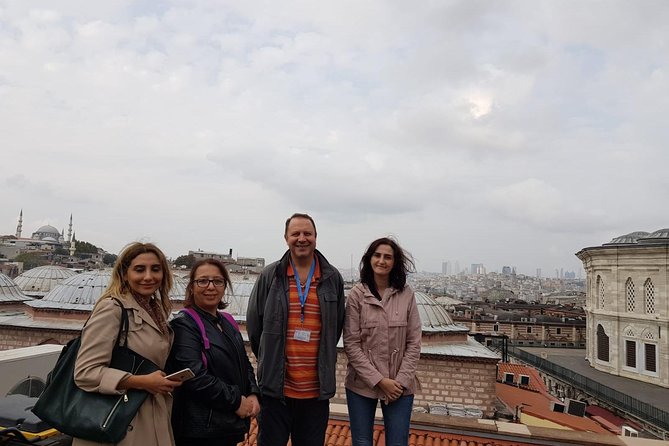
From the cistern, you come up to the Hippodrome. This stop is brief, about 20 minutes, but it’s a useful payoff because it places the story in public life. The Hippodrome was the center for entertainment and social gatherings in ancient Constantinople, known for chariot races and crowds.
If you have ever looked at Istanbul and wondered how it became so political and so public at the same time, the Hippodrome is one of the best answers. It also ties back nicely to the earlier exhibition link, since you’ve just been in an underground space associated with Hippodrome-era context.
A panoramic pause at Seven Hills Hotel
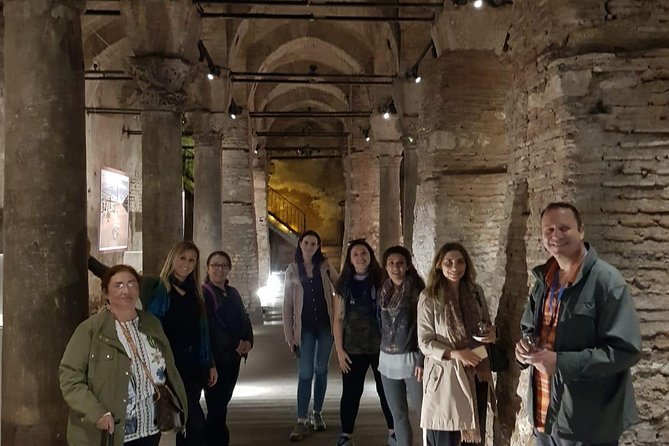
Next comes a quick break at the Seven Hills Hotel panoramic terrace for about 20 minutes. This is your “catch your breath and look” moment.
In Istanbul, views are not just pretty. They help you orient your mental map. This terrace time gives you a way to understand why the route feels the way it does, and how hills shape movement in the city.
What to watch: bring your phone battery charging habit. You will want photos, but you will also want battery later for the cistern stops.
Binbirdirek Cistern (Cistern of Philoxenos): the one many skip
After the terrace, the tour heads to the Binbirdirek Cistern, also known as the Cistern of Philoxenos. It’s included with admission, about 30 minutes. This is described as the second largest cistern in Istanbul, and the key point is that it often gets overlooked because many visitors focus on the Basilica Cistern.
I like this choice because it gives you variety. Two cisterns can feel repetitive if they are identical. Here, the difference is framed around scale and the fact that you’re seeing a less crowded option with its own history and a famous visitor connection. Mark Twain is specifically mentioned as being captivated by it and writing impressions.
What to watch: bring patience with “less famous” sites. If you expect every cistern to be a showpiece, you might miss the charm. The appeal here is the quieter, more off-track feel.
Cemberlitas landmarks: Column of Constantine and what it represents
The tour then visits Cemberlitas Sutunu, including a look at the Forum of Constantine and the Column of Constantine. This stop is short, about 20 minutes, and free for this tour.
The column was erected by Emperor Constantine to commemorate Istanbul becoming the new capital of the Roman Empire about 1700 years ago. That kind of commemoration detail is exactly what makes a simple stone column feel important. You’re not reading a plaque alone, you’re connecting a power decision to a visible marker that survived.
What to watch: it’s a quick stop. If you want photos, plan for a few steady minutes and don’t try to do it all at once.
Lunch at a nearby lokanta: fast service, local focus
Lunch is included and about 45 minutes, at a nearby lokanta. The description here is practical: it’s a Turkish-style eatery known for quick service and a wide array of dishes, especially popular with local shopkeepers.
That matters because quick local service usually means you get fed well without the long wait that can derail a guided schedule. You’ll likely taste more than just one “tourist safe” item. Keep your pace relaxed so you can eat well, not just quickly.
What to watch: since the meal is part of the route timing, expect a set plan for the group. If you have strict dietary needs, tell your guide early.
Forum of Theodosius: column with reliefs spiraling upward
Next is the Forum of Theodisius, free for this tour. It’s about 15 minutes. Emperor Theodosius I built it in the late 4th century, and it served as a center of public life with arcades, shops, and marketplaces.
The key visual at the forum is the Column of Theodosius, described as featuring reliefs spiraling upward that commemorate military victories. Even if the original forum is mostly lost, the remaining structure gives you the sensation of a place that once hosted big processions and major public moments.
What to watch: the time here is limited. If you are the type who likes to stare and read every detail, you might want to add extra solo time afterward.
Kalenderhane Camii: outside look at a mixed Byzantine-Islamic building
The tour includes a stop at Kalenderhane Camii, about 15 minutes, and it’s outside only. The building was originally the Theotokos Kyriotissa Church, and it shows a mix of Byzantine and Islamic architectural styles, with domes and detailed brickwork.
This is a good stop for understanding Istanbul’s layered religious architecture. You may not go inside, but even an outside look can teach you how styles overlap in the city.
What to watch: if you want interior details, this might feel limiting. But as part of a longer day, it keeps the route moving.
Vefa Bozacisi: boza tasting as a time capsule
Then you get boza tasting at Vefa Bozacisi, about 15 minutes. Boza is a fermented Turkish drink with a distinct flavor and texture, and it is treated as a cherished local tradition with age behind it.
I like this stop because it is not just “one more photo.” Food and drink are how you remember a city. Boza is also a good break after walking and before you head into the Ottoman masterpiece area later.
What to watch: it’s included, but if you dislike fermented drinks, tell the guide. You can decide what you’re comfortable trying.
Şehzade Mehmet Mosque: Mimar Sinan at full strength
The route continues to Şehzade Mehmet Mosque, about 30 minutes, free for this tour. This is one of the big visual payoffs because it is a masterpiece by Mimar Sinan, commissioned by Sultan Süleyman the Magnificent in memory of his son.
You get the chance to see the Ottoman architecture style at a high point: domes and calligraphy, with a calm atmosphere. For many people, this is where Istanbul shifts from “empires and stone” to something more human and serene.
What to watch: bring a respectful mindset for mosque settings, and plan your time for quiet viewing rather than rushing.
Valens Aqueduct: the Roman water system you can actually spot
Finally, the tour ends at the Aqueduct of Valens, also called Bozdogan Kemeri. It’s a short closing stop, about 10 minutes, free for this tour.
This aqueduct stretches across Istanbul and was built in the 4th century to supply water to Constantinople. It’s one of those landmarks that makes a modern city’s survival feel older than it looks. It also gives you a final “infrastructure history” moment to balance out the palaces and forums.
Price and value: is $490 per person worth it?
At $490 per person for a 6 to 7 hour guided experience, the value depends on how you like to travel.
This price looks more reasonable when you factor in what’s included: entrance costs, a professional guide, tea or coffee, an Istanbul map, boza tasting, and lunch. For Istanbul, entrance fees add up fast, and a guide who can manage special-permission stops can turn a normal sightseeing day into something rarer.
The other side is what’s not included: private transportation. That means you should be prepared for walking and transit between stops, even though hotel drop-off is mentioned for centrally located accommodations. If you prefer getting from place to place with minimal effort, ask the provider what the day’s movement looks like for your exact pickup and route.
Bottom line: if you want a structured day that focuses on underground Istanbul plus key surface landmarks, and you care about guided context, this price can feel fair.
Who this tour fits best
This is a great match if you:
- like Ottoman and Byzantine sites explained clearly
- want more than the usual “one cistern, one church, done” plan
- enjoy food breaks that feel local, not purely tourist-focused
- prefer a guide who is flexible and attentive, including for dietary needs
It may be a tougher choice if:
- you have limited mobility or you struggle with stairs and descents
- you want long, slow museum-style time at one place
- you hate fermented drinks and won’t want the boza tasting moment at all
FAQ
FAQ
How long is Istanbul Unveiled, and is it walking heavy?
The tour runs about 6 to 7 hours. It does require a strong physical fitness level, and you will be descending into cisterns and moving between multiple stops. Comfortable walking shoes are recommended.
Is the tour in English?
Yes. The tour is offered in English.
What does the price include?
It includes entrance costs, a professional guide, coffee and/or tea, an Istanbul map, boza tasting, and lunch.
What is not included?
Private transportation is not included.
Do I need to buy tickets separately?
Entrance costs for the included sites are listed as included, and you also get a mobile ticket.
Where does the tour start and end?
It starts at Küçük Ayasofya Mosque (Küçük Ayasofya, Küçük Ayasofya Camii Sokagi No:20, Fatih/İstanbul). It ends around the Aqueduct of Valens in the Kalenderhane area (European Side, Kalenderhane, Fatih/İstanbul).
What age is required for the tour?
The minimum age is 8 years old.
Is this a private tour?
Yes. It is listed as a private tour or activity, and only your group participates.
What is the cancellation policy?
Free cancellation is allowed. You can cancel up to 24 hours in advance for a full refund. If you cancel less than 24 hours before the start time, the amount paid is not refunded.
Should you book this tour?
If your goal is to see Istanbul with a clear story arc, this is a strong choice. You’ll get tea, boza, and lunch, but the real win is the mix of surface landmarks with underground cistern time and special-permission stops. That pairing makes the day feel like more than a standard highlights loop.
I’d book it if you like learning with a guide and you are comfortable with a full walking day. I’d skip it or choose a gentler option if cistern descents and stairs are an issue for you.
If you do book it, aim to arrive with energy for a real day of sites, and trust the guide to keep the pace smooth. The guide’s reputation for planning, clarity, and access is the main reason this itinerary earns top scores.
Recently reviewed around Istanbul
- Highlights of Istanbul★ 5.0 · 34 reviews
- Istanbul Private Tours: 1, 2 or 3 Day Highlights★ 5.0 · 28 reviews
- Best of Istanbul: Basilica Cistern – Blue Mosque – Grand Bazaar★ 4.5 · 54 reviews
- Guided Hagia Sofia, Blue mosque, Basilica Cistern skip lines tour★ 5.0 · 115 reviews
- 7N 8D Full Package Highlight Turkey Trip★ 5.0 · 8 reviews
- 1 Day Private Guided Highlights of Istanbul Tour★ 5.0 · 40 reviews
- PRIVATE ISTANBUL FOOD TOUR & Hidden Pearls of the old city★ 5.0 · 43 reviews
- Istanbul Shore Excursion by TRAM: Half Day Private Tour from Port★ 5.0 · 34 reviews