
Reviewed · GALLIPOLI & ANZAC BATTLEFIELD TOURS
Gallipoli Tour from Eceabat, Canakkale
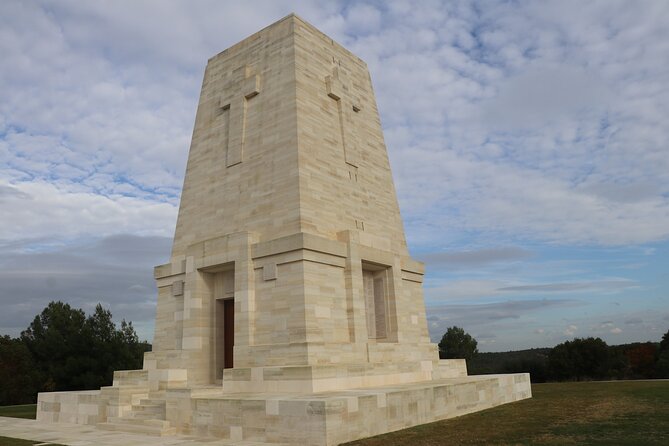
Gallipoli is one of those places where the details matter, and this tour is built to help you see them without turning the day into logistics homework. You cover the main ANZAC landing and commemoration sites, then round things out with the Turkish memorials and The Nek, including the famous Light Horse moment people recognize from the 1981 movie.
I like that you get hotel pickup and drop-off in Eceabat, and the whole thing runs on a tight, scheduled flow. I also love the way the guide turns travel time into context, plus the break for an included lunch at a seafront restaurant. One possible drawback: with a roughly half-day pace, you will have limited time to linger at each graveyard or trench site, so bring a calm mindset and accept that this is a highlight-focused route.
Key things that make this Gallipoli tour worth your time
- Round-trip transport from Eceabat saves you from figuring out roads, parking, and timing.
- Small group size (up to 16 people) keeps the guide’s explanations practical, not generic.
- WWI storytelling on the drive helps the battlefield make sense before you start walking.
- Lunch is included at a seafront restaurant, with a vegetarian option available.
- You hit both sides of the story, with ANZAC memorials and Turkish memorial sites in the same outing.
A focused Gallipoli route, built for first-timers
If you want Gallipoli but you do not want to plan it from scratch, this tour is a strong fit. The big win is the mix: you see the ANZAC landing area and the major cemeteries, then you move into the memorial zones that explain the broader campaign story. Instead of hopping randomly between viewpoints, you follow a logical path so the landscape and the names connect in your head.
You can also treat this as an “intro with depth.” The guide is there for the facts and the stories, not just to point. That matters at Gallipoli, where many visitors arrive with only a few anchors. Here, you leave with those anchors plus the meaning behind them.
The day is about 6 hours total, and it is intentionally structured. That is good for value and energy, but it does also mean you will not roam freely or spend extra time wherever you personally linger.
The meet-up in Eceabat, and how the day actually starts
Pickup runs from 12:00 to 12:15 pm at Eceabat hotels. You meet your group, then step into an air-conditioned minivan for the ride toward Gallipoli. This setup matters more than it sounds. Gallipoli can be windy and hot, and you do not want to start your day tired, late, or stuck waiting on transport.
You should plan to be ready a few minutes early. Since the tour is timed, being “close enough” is not enough. Once you are in the minivan, the guide can start setting the scene during the drive, which helps you get oriented before you arrive.
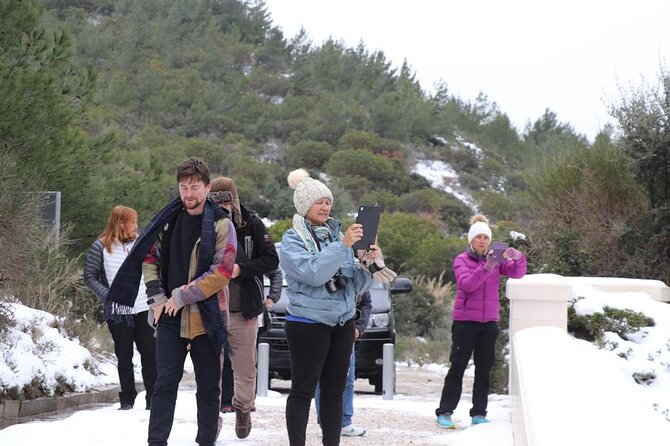
A small note on comfort: the tour is mostly outside once you start visiting sites. Wear shoes that work on uneven ground and bring layers, because the coastline can shift fast from mild to breezy.
Lunch with a seafront break, then back into the story
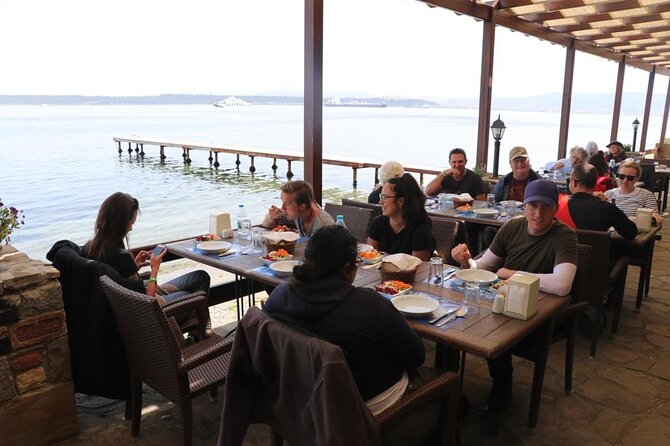
One of the most practical parts of this experience is that the schedule includes lunch. Drinks are not included, so you may want to budget for water or something non-alcoholic when you sit down.
The restaurant location on the seafront gives you a real break. You are not eating in a hurry beside a road. Instead, you get time to reset, refuel, and look out at the water you will be thinking about in the afternoon. It also keeps the day from feeling like a nonstop march of solemn stops.
If you have dietary needs, you should flag them at booking. A vegetarian option is available, which helps if you are traveling with someone who needs that support.
Guided battlefield context: why the drive matters
A big reason this tour feels worthwhile is that the guide uses the journey time to build context. You are not just dropped at “the famous spots.” You learn how the disastrous World War I campaign played out here, including that largely Australian and New Zealand Army Corps (ANZAC) forces landed in 1915 to push back Turkish forces.
Then, once you are heading into Gallipoli proper, the guide sets up what you are about to see. That turns the sites from a list of names into a connected story. On a battlefield tour, that is the difference between collecting photos and actually understanding the ground.
If you are lucky enough to get Ercan, you may have an especially engaging experience. One example from past guests described him as brilliant, informative, and engaging right from lunch onward. Obviously, guides can vary, but the tour clearly prioritizes strong narration and clear explanations.
Brighton Beach: the landing intention comes first
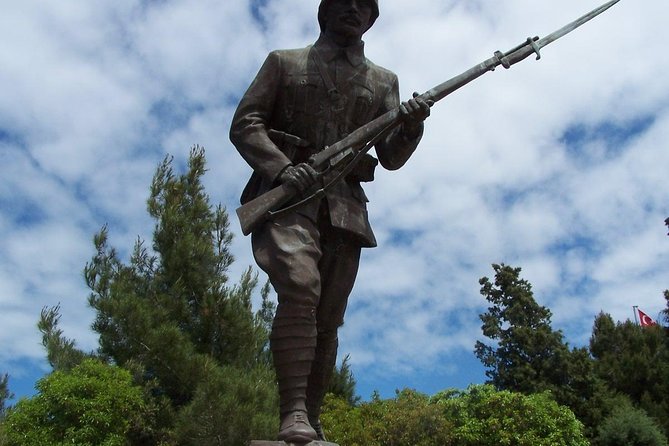
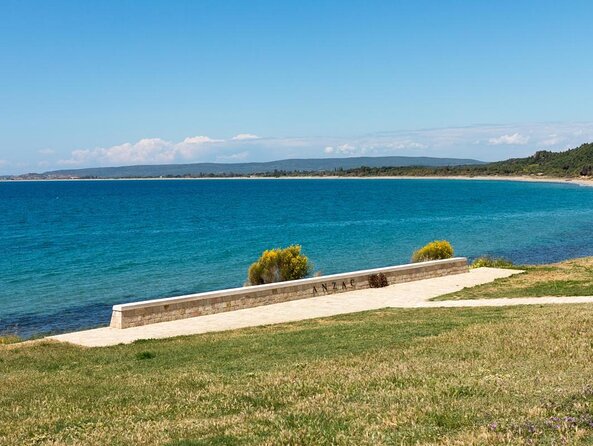
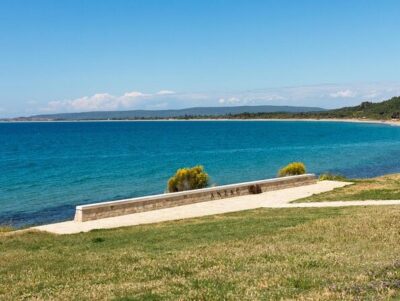
Your battlefield time starts with the ANZAC landing narrative. You will visit Brighton Beach, where the ANZACs originally intended to land. This stop is important because it gives you a “before” moment in the story, the sense of what the plan was versus what reality brought.
Standing where landing was intended helps you understand why the terrain and the coastline mattered. Even if you only have a short time at this stop, the guide’s framing helps you interpret the geography rather than just looking at a shore.
Practical tip: this area is exposed. You may want a hat and sunscreen, and you will probably appreciate water on hand.
Anzac Cove: where they actually came ashore
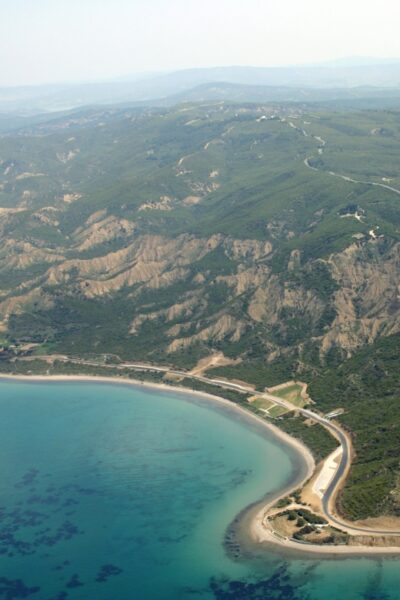
Next you move to Anzac Cove, the place where they came ashore. If Brighton Beach is the intention, Anzac Cove is the reality. It is one of those names you have likely heard for years, and seeing it in person makes the scale feel more tangible.
You will walk and look around with your guide explaining how the fighting and landing unfolded. The time here is focused, about 50 minutes for this stop, so you should be ready to pay attention rather than chase every photo angle.
This is also a meaningful place to slow down. Even though the tour keeps moving, you still get space to absorb the seriousness of the ground and the memorial atmosphere.
Beach Cemetery and the John Simpson Kirkpatrick connection
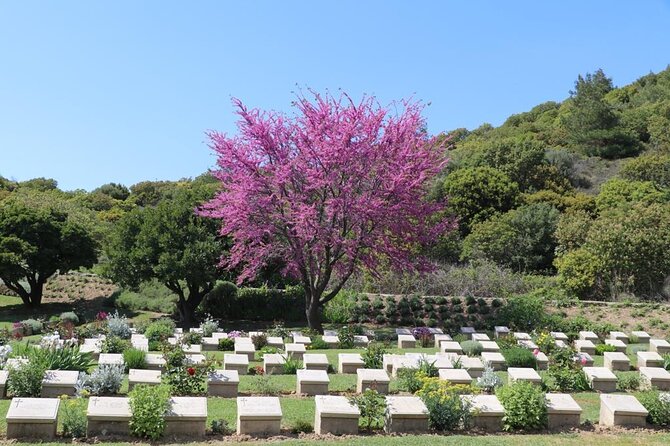
Then comes Beach Cemetery, which is one of the most emotionally loaded stops on the route. Here you will see graves connected to the human cost of the landing. One standout story you will hear is about John Simpson Kirkpatrick, known for using donkeys to evacuate the wounded.
That detail is not just trivia. It is the kind of story that helps you picture how difficult evacuation and care were under fire and amid chaos. It makes the cemetery feel less like a list of dates and more like real people and real decisions.
You might find this stop hits harder if you have a personal connection to the ANZAC story, but even without that, it is a powerful reminder of what these memorials preserve.
Ari Burnu Cemetery: another layer just north of the cove
After the cemetery near the shore, you continue to Ari Burnu Cemetery, located just north of Anzac Cove. This stop adds another layer to what you just learned.
It also gives you a bit of variety in the experience. Instead of only focusing on one focal point, you shift up and around the area. You see how the commemoration extends across multiple nearby sections, which helps you understand Gallipoli as a whole zone, not just one dramatic cove.
Lone Pine Cemetery: the Australian capture point
Then you visit Lone Pine Cemetery and the Australian memorial area. This is a highlight for many people because the storytelling becomes specific. You will hear how Australians captured the site in August 1915.
That month matters. It signals that the war here was not a single landing day. It was sustained and evolving, and the memorials reflect that longer arc. If you only know the landing date, this stop helps correct that view gently, without drowning you in details.
Time here is around 30 minutes, which is enough for the main memorial elements and a quiet look. If you want to take your time, think about what matters most to you before you arrive, such as specific names, badges, or plaque wording. This lets you focus instead of trying to read everything at speed.
Johnston’s Jolly trenches: seeing the fighting ground
After Lone Pine, you go to the original trenches at Johnston’s Jolly. This is where the tour can feel most “real” in a physical sense, because trench lines are hard to forget once you see them. Even without a long hike, the sight of trench remnants helps you understand how close, how constrained, and how punishing the ground was.
This stop also works well if you like to connect stories to terrain. You are not only hearing what happened, you are looking at the kind of place where that story played out.
Turkish Memorial, Chunuk-Blair Memorial, and The Nek
The final stretch expands the viewpoint beyond the ANZAC story alone. You will visit the Turkish Memorial and the Chunuk-Blair Memorial, then finish at The Nek.
This is where the tour earns its full value. Gallipoli is often framed one way for many visitors. This route keeps you aware that it was a shared tragedy on the same ground for different forces and different nations. The Turkish memorial stops help balance your understanding while keeping the day on message.
At The Nek, you will hear about the famous Light Horse charge depicted in the 1981 movie, Gallipoli. Even if you only know the film, this is a useful moment because it connects popular memory to the actual site name and the commemorative context.
If you are a movie fan, go in with that curiosity, but also treat this as a place of remembrance. The tour does a good job of guiding you from recognition into understanding.
Price and value: is $180 fair for this half-day?
At $180 per person for about 6 hours, you are paying for three things: guided interpretation, lunch, and round-trip transport from Eceabat. This is not a “cheap transfer” with a map and a shrug.
Here is what you get that typically costs extra when done independently:
- Hotel pickup and drop-off in Eceabat, so you are not organizing your own rides.
- A local guide who explains the campaign and the significance of each stop.
- Lunch included at a seafront restaurant.
- Admission to key battlefield sites included as part of the route (you will spend the time visiting instead of handling ticket logistics).
Could you do Gallipoli on your own for less? Probably, if you are comfortable with planning transport and navigating between sites quickly. But if you want your money to buy time saved and meaning added, this price can feel very reasonable.
What to bring, what to expect, and how to pace yourself
Because this is a battlefield tour, your attention matters. You will cover a lot of ground in one day, and the guide’s job is to help you keep the story straight.
Bring:
- Comfortable walking shoes
- Sun protection (the coastal areas can be bright and windy)
- A light layer for breezy moments
- Water or plan to buy drinks since drinks are not included with lunch
Keep your expectations realistic:
- You will see the major sites, not every corner of the peninsula.
- Stops like cemeteries and trenches are best experienced with slower reading and quiet attention. The tour moves steadily, so aim to focus on what matters most to you rather than trying to absorb everything.
Who this tour is best for
This works especially well if:
- You want a guided first visit to Gallipoli that makes sense quickly.
- You are staying in Eceabat and prefer not to wrestle with transportation.
- You like narrative-driven tours, where the guide sets context before you arrive.
It may feel less ideal if:
- You want an unhurried, self-guided wander with long independent breaks.
- You are the type who needs lots of reading time at every plaque and grave, with no time pressure.
For most people though, the balance is strong. You get the big names, the key sites, and enough explanation that you leave understanding how the ground connects.
Should you book this Gallipoli tour from Eceabat?
I would book it if you want a high-impact, well-timed way to see Gallipoli without turning your trip into a logistics puzzle. The combination of hotel pickup, a guided WWI narrative, and lunch included makes the day feel efficient and thoughtful. If you care about details, this route treats them seriously, from the landing locations to Lone Pine, the trenches at Johnston’s Jolly, and the memorial sites at Turkish Memorial, Chunuk-Blair Memorial, and The Nek.
One last thing to consider: the experience depends on good weather. If conditions are poor, the tour may be rescheduled or refunded. If you are traveling with flexible plans and you are ready for a guided, respectful, fast-moving day, this is a smart choice.
FAQ
How long is the Gallipoli tour from Eceabat?
It runs for about 6 hours (approx.).
What time does pickup happen in Eceabat?
Pickup is scheduled between 12:00 and 12:15 pm from Eceabat hotels.
Is the tour guided and in English?
Yes. It includes a local guide and is offered in English.
What is included in the price?
The tour includes lunch, a local guide, and hotel pickup and drop-off.
Is vegetarian food available?
Yes. A vegetarian option is available, but you need to advise at booking.
What if the tour is canceled due to weather?
If it is canceled due to poor weather, you will be offered a different date or a full refund.
More Troy and Canakkale Day Trips
- Troy: Full-Day Tour from Istanbul
★ 4.7 · 312 reviews - Istanbul to Gallipoli, Canakkale and Troy. 2 Day Tour with Hotel
★ 5.0 · 144 reviews - Istanbul to Truva Troy Guided Day Tour with Lunch and Transfers
★ 4.5 · 134 reviews - Full-Day Troy Tour From Istanbul
★ 4.5 · 123 reviews
More Gallipoli and ANZAC Battlefield Tours
- Istanbul to Gallipoli Full Day Tour with Lunch and Transfers
★ 5.0 · 567 reviews - Gallipoli Full-Day Tour from Istanbul
★ 4.9 · 468 reviews - From Istanbul: Gallipoli and Anzac Full-Day Tour
★ 4.9 · 345 reviews - Canakkale: 6-Hour Gallipoli Tour with Lunch
★ 5.0 · 168 reviews
Gallipoli & ANZAC Battlefield Tours, compared.
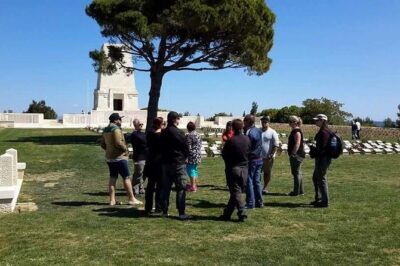
Istanbul to Gallipoli Full Day Tour with Lunch and Transfers
Read our review →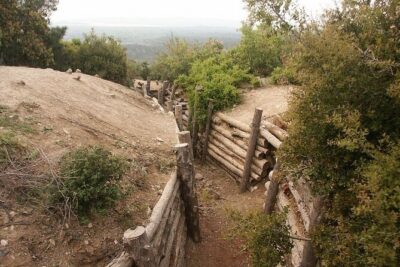
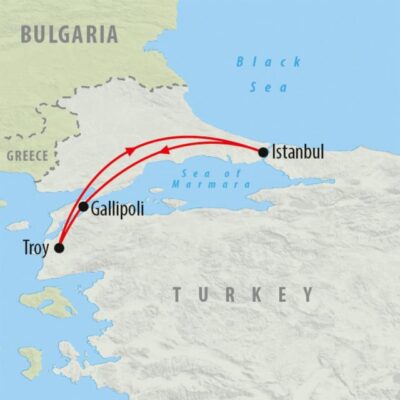
Istanbul to Gallipoli, Canakkale and Troy. 2 Day Tour with Hotel
Read our review →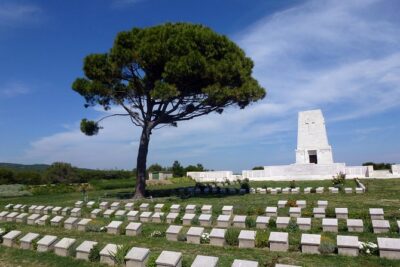
6 Days Turkey Tour Cappadocia, Pamukkale, Ephesus, Gallipoli Troy
Read our review →Browse the lists this tour appears in